
INTRO TO
BAPTISM AT SAVICA
Choreography: Uršula Teržan
Choreographic consulting: Tanja Skok
Movement design: Anamaria Bagarić, Tajda Podobnik, Anja Möderndorfer / Evin Hadžialjević
Zven: Marija Erjavec
Voice: Polona Juh
Scenography: Roman Uranjek
Costume design: Marta Vrhovec, One fiction factory: Meta Megušar Bizjan,
Irena Tozon Mrhar
Sound Design and Music: Mario Marolt
Light design: Anže Kreč / Nastja Miheljak, Juš Zidar (technical assistance)
Photo: Miha Fras
Video: Veronika Francesca Štefančič
Production: Celinka - association of women creators of contemporary dance
Co-production: Fotopub - production support
Premiere: October 16, 2021 at 7 and 8 p.m., Art studio/apartment of visual artist Roman Uranjek, Tavčarjeva 2, Ljubljana
Relocation: June 10, 2022 at 7:55 p.m. and 8:40 p.m., AGRFT, Aškerčeva 5, Ljubljana
Baptism at Savica, the most important Slovenian epic poem, the beginning of Slovenian mythology, was the basis of many performances or appropriations in the history of Slovenian art.
Contemporary dance exploration of Slovenian mythology is a kind of return to the roots, a reflection of the identity crisis of Slovenian culture.
The creators, like a wounded animal returning to its primal instincts, return to the historical research of the origins of our nation, its rebellion and its defeat.
"But the gods favor us with death,
a less terrible night has flown into the black earth,
when there are slave days under the bright sun!”
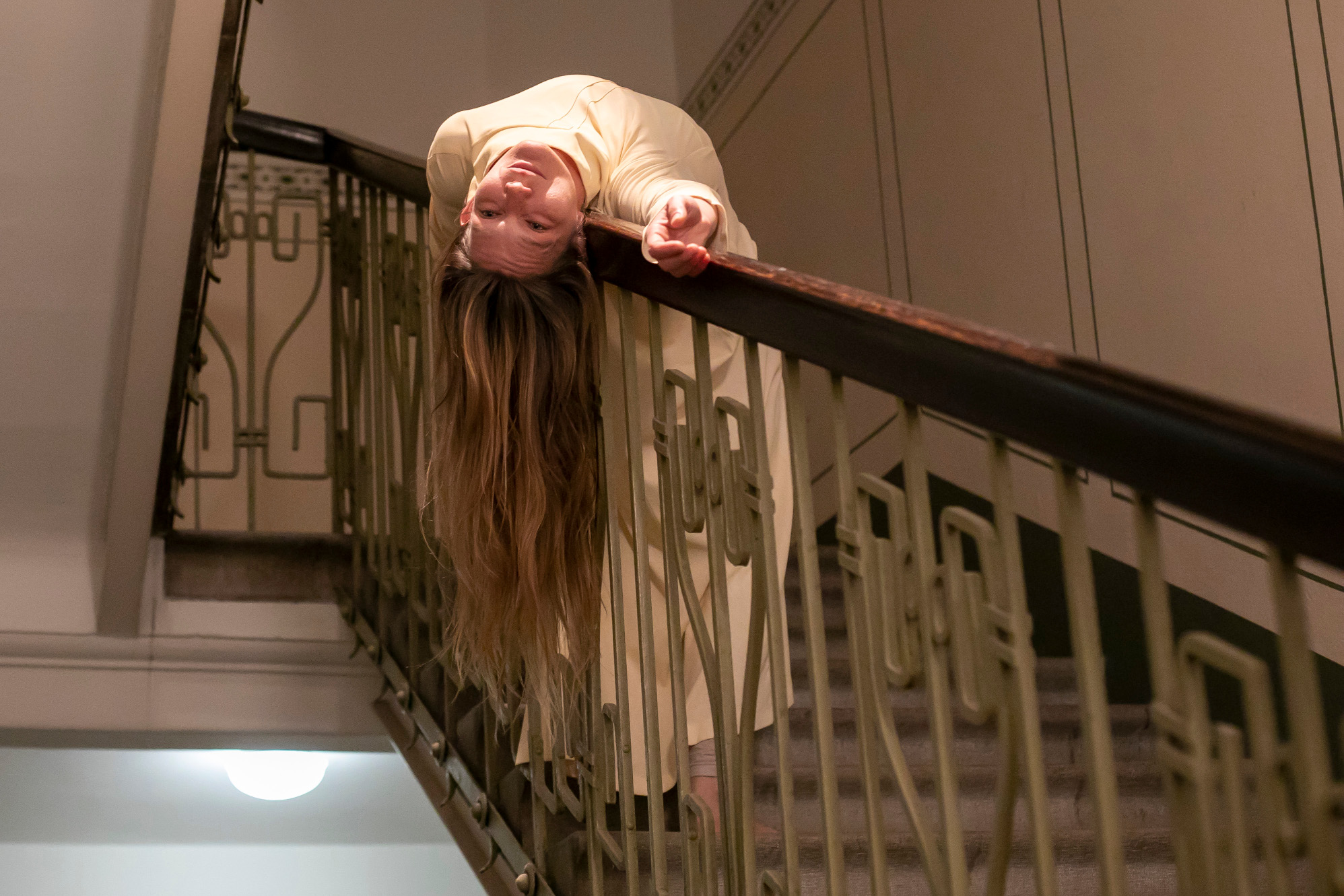
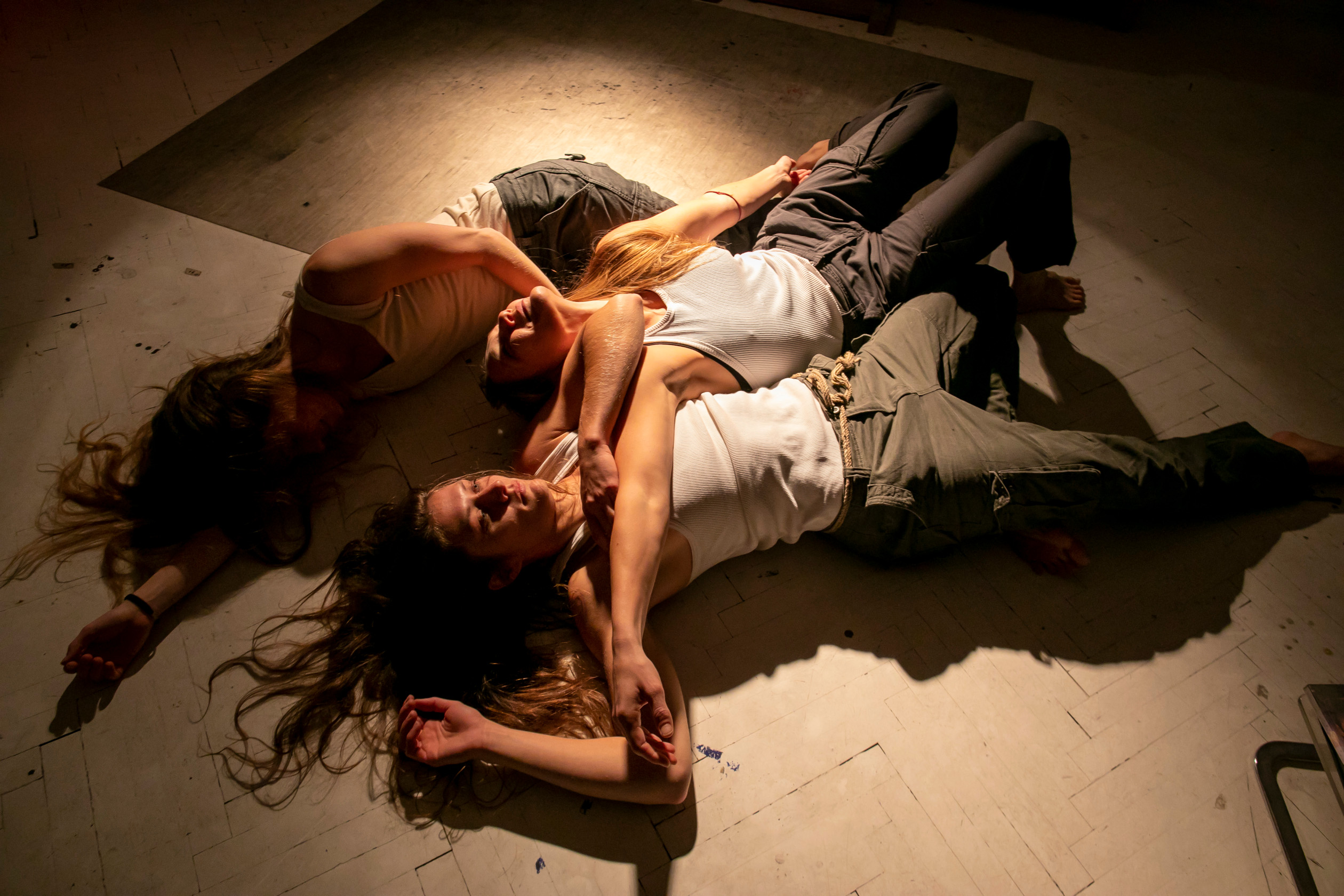
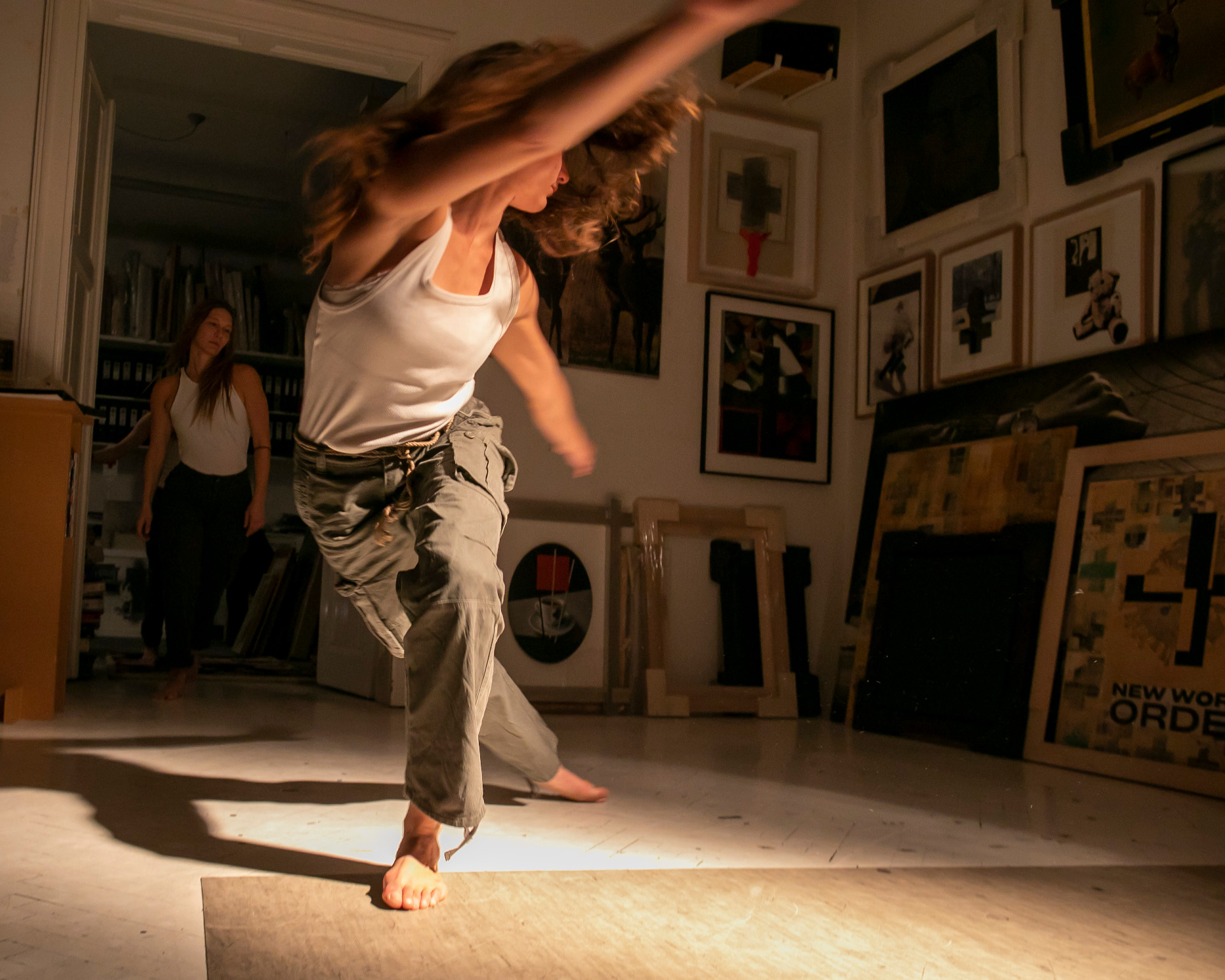
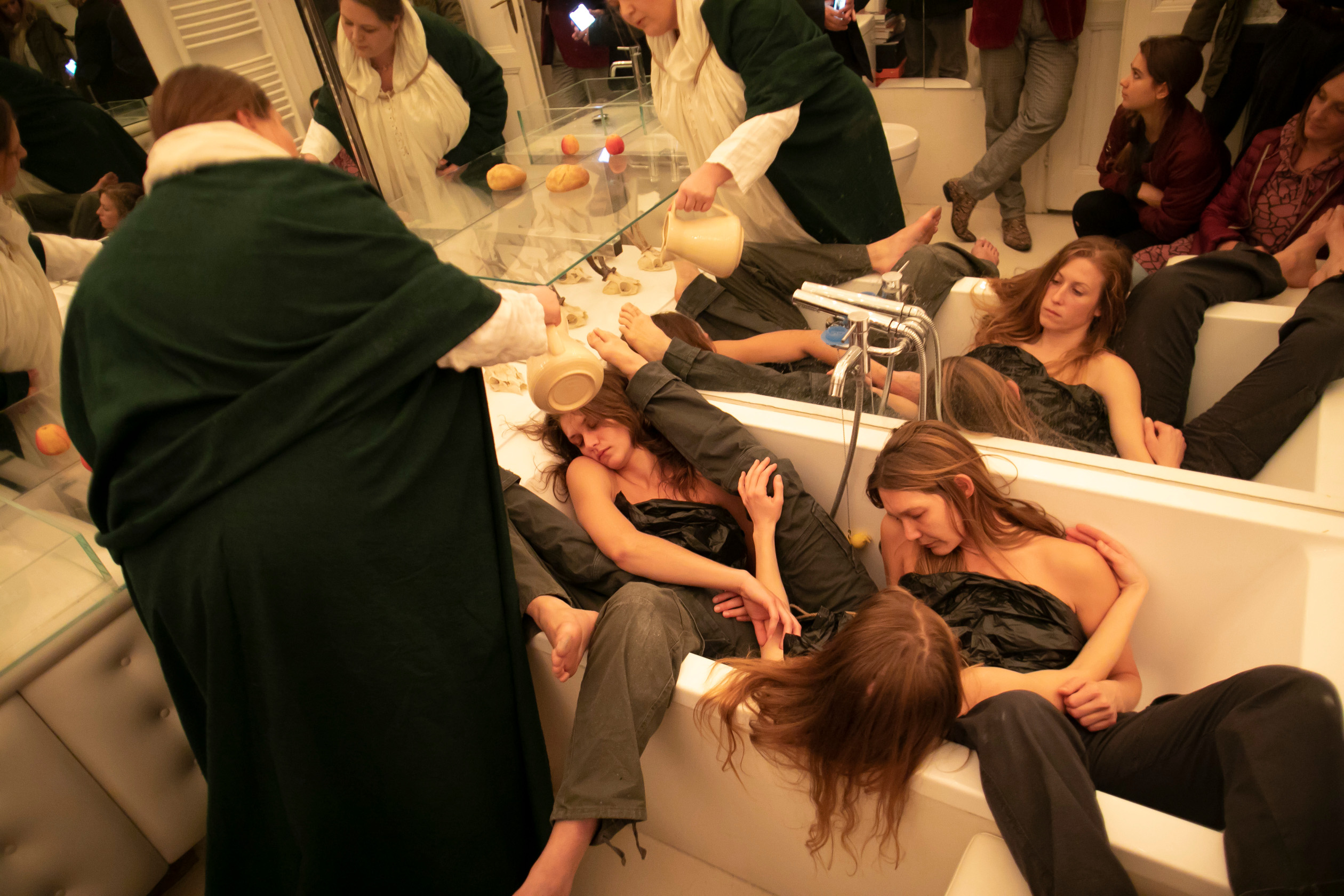
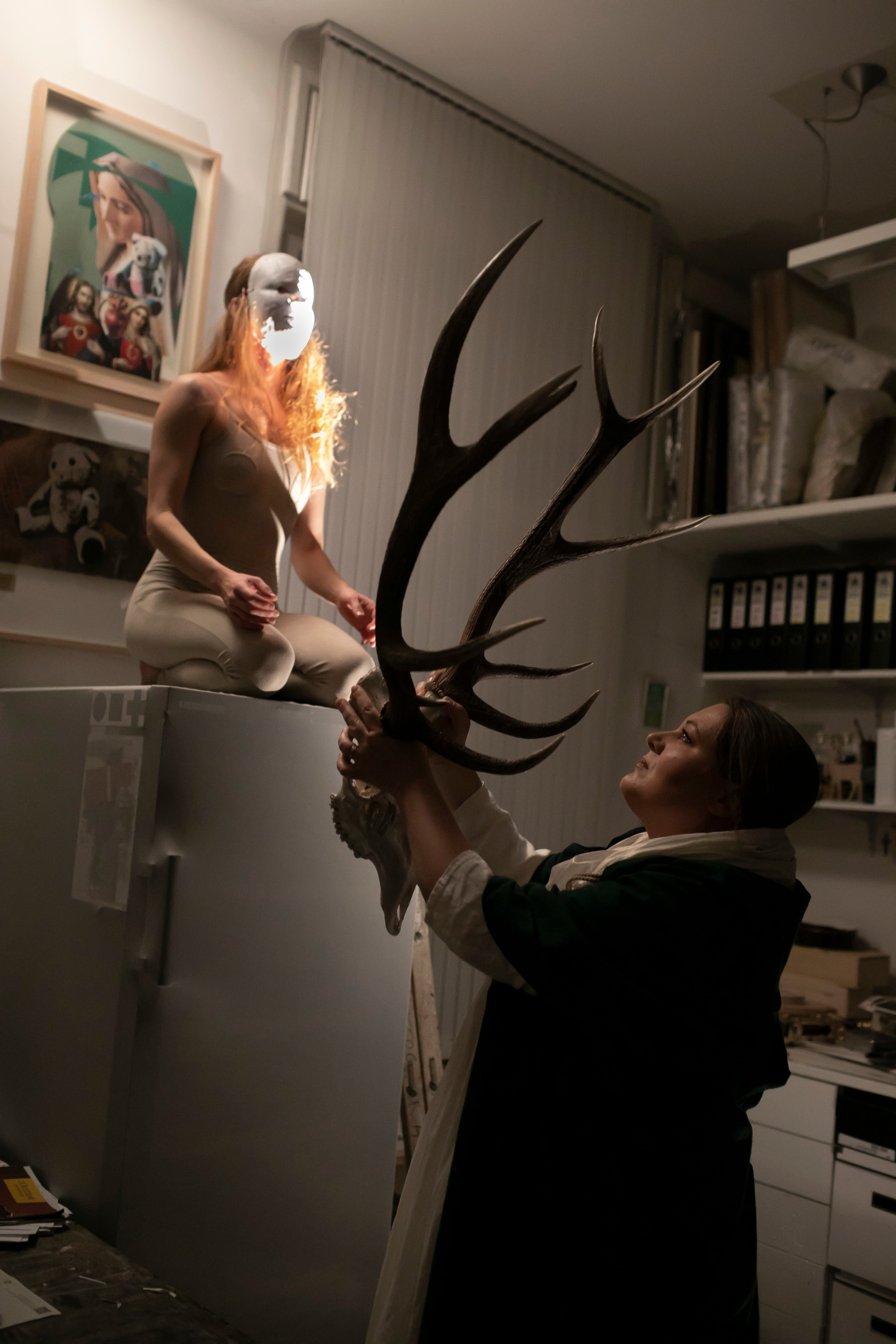
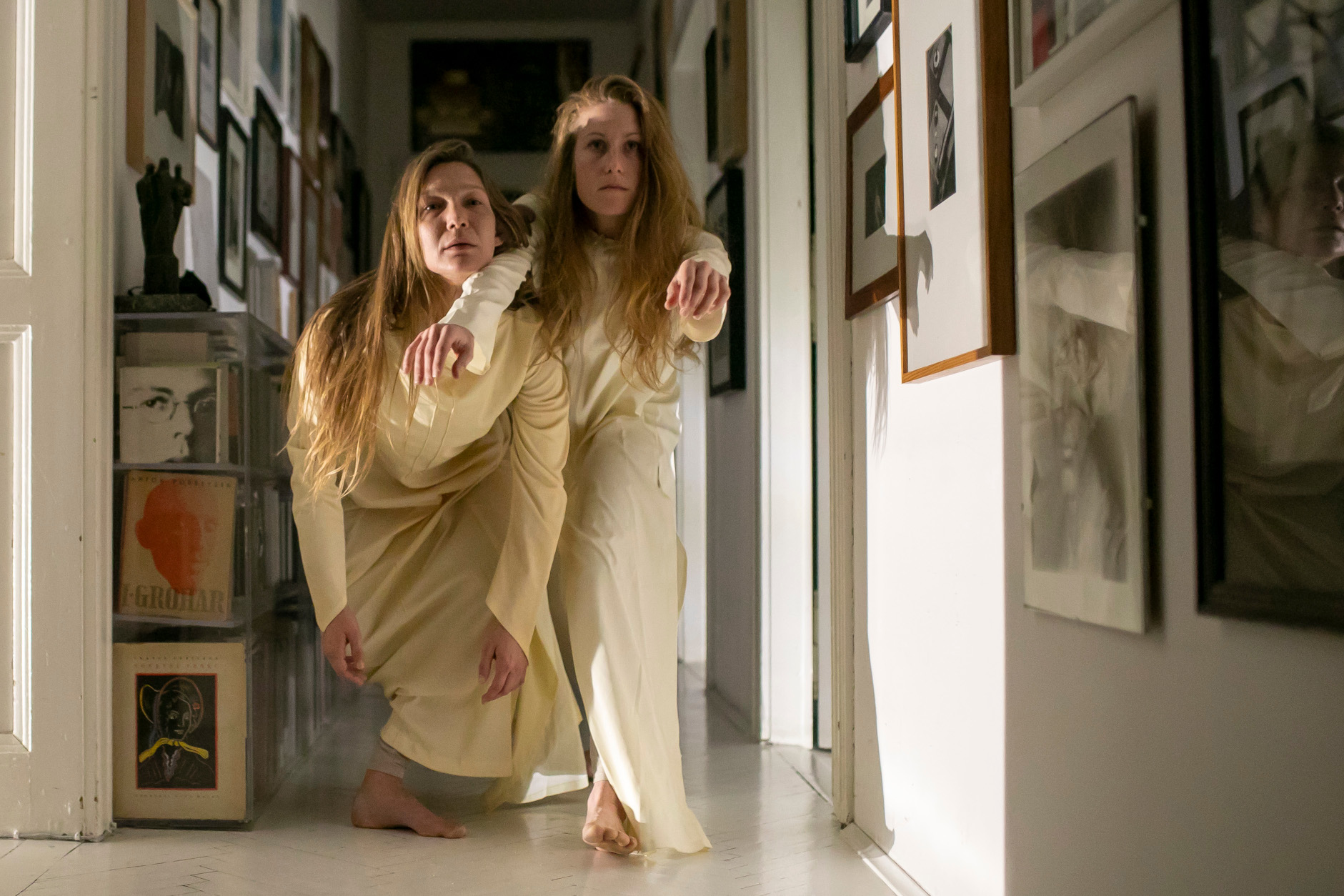
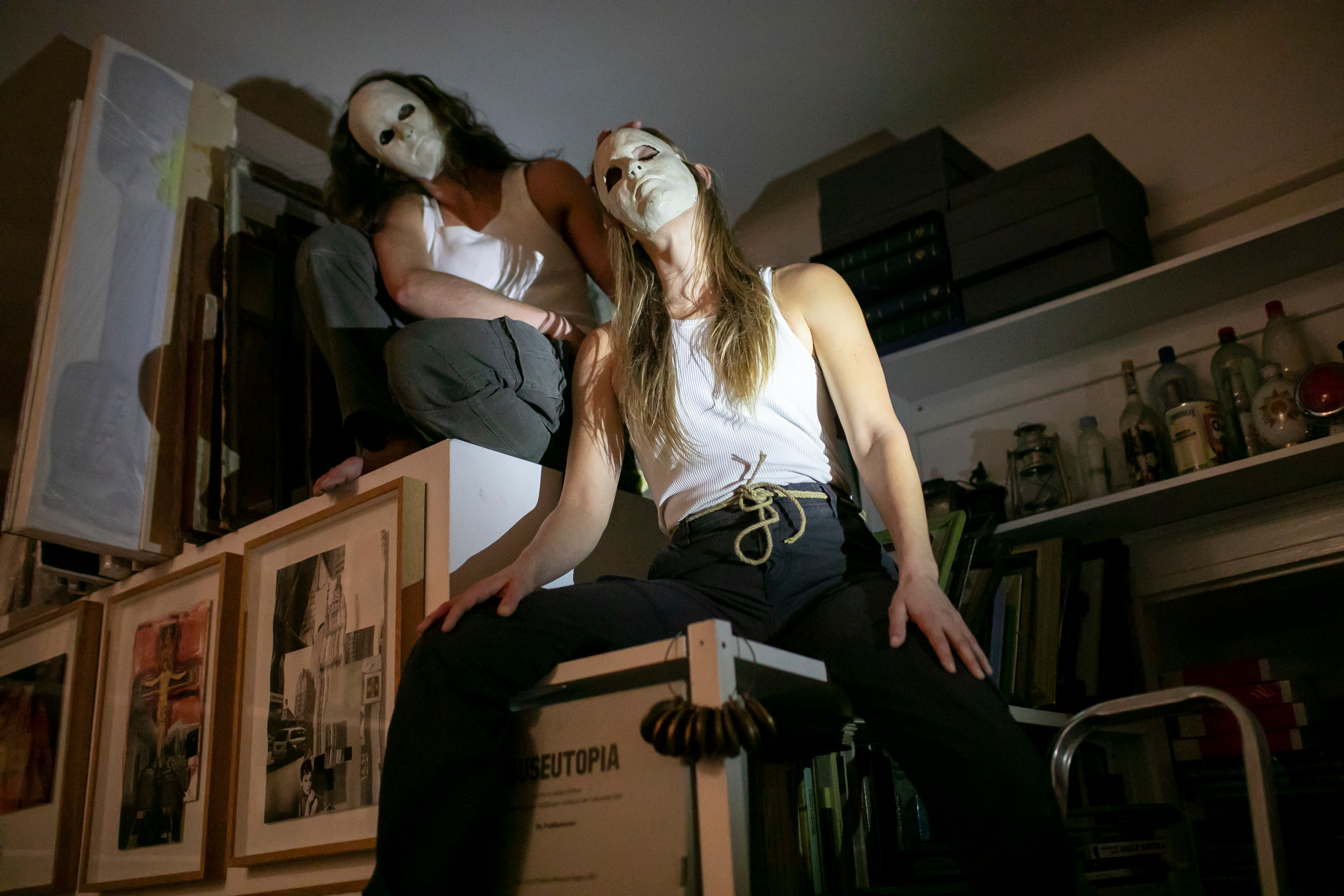
The contemporary dance performance of Krst pri Savica by choreographer Uršula Teržan with movement designers Anja Möderndorfer, Anamaria Bagarić, Tajda Podobnik and singer Marija Erjavec will be staged in the private apartment of Roman Uranjek, who, as scenographer, will open his home to the public and, in collaboration with movement creators, will prepare it for performances.< br>
The performance, which is based on the current socio-political situation in dialogue with Slovenian mythology, creates a politics of movement that intertwines between pagan natural ritual and humanistic moral norms of a certain historical moment, and through the struggle between ancient and modern monotheistic faith and the ritual elements of Mother Earth, explores and it points to the class struggle of the present.
By combining classical words, opera voice, experimental scenography and modern movement, through the exhausting dance of four pagan bodies in a game of conversion and exploration of one's own personal past, Uršula Trežan's Baptism at Savica simultaneously depicts the recent eviction of the Rog factory, the attack on the Capitol...
Like raindrops of happiness, the creators of the play want to gradually carve a canyon into a middle-class apartment on Tavčarjeva Street and draw attention to the class inequalities of today.
When Krst pri Savica remains speechless, similarly to Smole, Teržan continues... With the impression of the present, with the perversion of modernity, as Elfriede Jelinek paints the impression of today's bourgeois society, which is ripe for shame of itself.
F. Prešeren: Baptism at Savica
Prešeren's transition between the classical antique form of the heroic epic and lyrical poetry, which questions the personal plight of the protagonists, can be translated into "The personal is political" of the feminist struggles of the 1960s and 1970s, and elements of the relational aesthetics of contemporary art can be recognized in it.
The actualization of this well-known poem has already been carried out several times, but it is not wrong to think that today is one of those moments when the Slovenian nation is experiencing one of its greatest hardships.
If at that time our nation was attacked by a foreign religion, today this nation is being attacked alone, with that religion at its side.
Just as in the time of Christianization, even now we are fighting a battle between old and new gods, with tradition on one side and technocratic capitalism on the other.
Already Prešeren interwoven contemporary and classical mythology in his poetry, and the creators of this contemporary dance performance create a new manifestation that touches actual modernity, similar to Gaiman's novel American Gods combining mythological deities with the deities of the modern technologically conditioned capitalist system of the modern world.
Dušan Smodej
The baptism at Savica happens on the spur of the moment, in today's moment of too-short time, which determines us through the prism of a telephoto lens.
Everything is an enlargement, a zoom, a frame, a moment.. that we tear away for ourselves, to be aware of our existence, an entity (real or virtual??) here and now! Where here? Where IS here? And when is NOW?.. if we can turn it over to the beginning again and again...
Who are we, where is our homeland (does this still matter today?!), do we (still) have roots somewhere, are we aware of what makes us, where we are from, and more importantly: WHERE are we destined?
We fight for ideas, ideologies, about which we know little, proverbially. Without thinking, we are ready to tear, break all ties, hurt ourselves and others. Just to feel something, even if it hurts a lot.
Beauty departs from the idea of importance, art from the idea of the importance of the nation, which is otherwise the foundation of some art. However, art today is transnational. The nation is tearing itself apart, within itself. Art holds up a mirror to her. In it we see ourselves, beautiful and ugly, as we are, national, transnational, human, individual human, earthly, just human.
Restlessness disturbs us, we cannot handle peace. We changed our faith a long time ago - over-traded in the supermarket.
"It develops ahead of time, it is realized in an instant, and all that remains behind it is the thought of the memory of an event, which in itself is a trace that is being erased." This is what Alain Badiou writes about dance, but it can also easily refer to Baptism and Slovenia , where already at the beginning there is an erasure of thought that is elusive.
There is a clear sequence of events that bring us back again and again to the beginning, to the question: who are we?
As Badiou says, dance does not have a fixed history, and neither does a nation. There is no one truth, it is full of scattered truths that constantly demand a redistribution of the relationship between vertigo and precision...every day a new body, a new vertigo, a new precision. It develops before the time of the event, it is realized in an instant, and only the thought of the memory of the event remains behind it, which in itself is a trace that is erased.
Where are we, are we still there?
Uršula Teržan
CRITICS
Balkan Dance Project vol. 5 in Celinka z utrinki zgodovinskega spomina!
Daliborka Podboj, Parada plesa, 06.11.2021
INTERVIEW
Uršula Teržan. Spet smo tu, po 100 letih tako rekoč na isti točki!
Daliborka Podboj, Parada plesa, 31.10.2021
MEDIA PARTNER